What to Wear to a Latin Dance Class | Beginner Guide
You signed up for your first salsa or bachata class — congratulations. Now comes the question every new dancer asks: what should I wear? The right outfit can make the difference between a comfortable, confident first class and one where you are constantly adjusting your clothes, slipping on the floor, or overheating before the first song ends.
At Salsa Dance Napa, we have seen every possible clothing choice walk through our doors, from ball gowns to board shorts. Here is the definitive guide to dressing for your first Latin dance class, based on years of experience watching what works and what does not. Getting ready for a wedding first dance instead? See our wedding first-dance lessons in Napa Valley.
Shoes: The Single Most Important Decision
Your shoes matter more than every other clothing choice combined. The wrong shoes can make it nearly impossible to execute basic turns, lead to knee and ankle strain, and significantly slow your progress. The right shoes make everything easier from your very first step.
The golden rule for Latin dance shoes is this: you need a smooth sole that allows you to pivot and turn without your foot catching on the floor. This single requirement eliminates most casual shoes people own. Running shoes, hiking boots, Converse, and most sneakers have rubber soles designed to grip — which is exactly what you do not want when dancing salsa or bachata.
For your first class, the best option is a pair of leather-soled dress shoes or loafers. If you do not own any, look for shoes with a hard, smooth bottom. Some beginners use a simple hack: put a piece of gaffer tape or masking tape on the ball of your foot to reduce friction. This is not a long-term solution, but it works surprisingly well for your first few classes.
For women, low heels with a strap (like a character shoe or a low kitten heel) provide stability while allowing turns. Avoid stilettos or platform shoes for your first class — they change your center of gravity and make the basic step harder to learn. Flats with smooth soles work well too, especially if you are not used to dancing in heels.
For men, leather-soled oxford shoes, loafers, or dress shoes are ideal. Some men dance in socks for their first class, which provides a smooth surface, though you sacrifice some foot support. Jazz shoes or dance sneakers are excellent options if you want to invest a small amount before buying dedicated salsa shoes.
When to Invest in Dedicated Dance Shoes
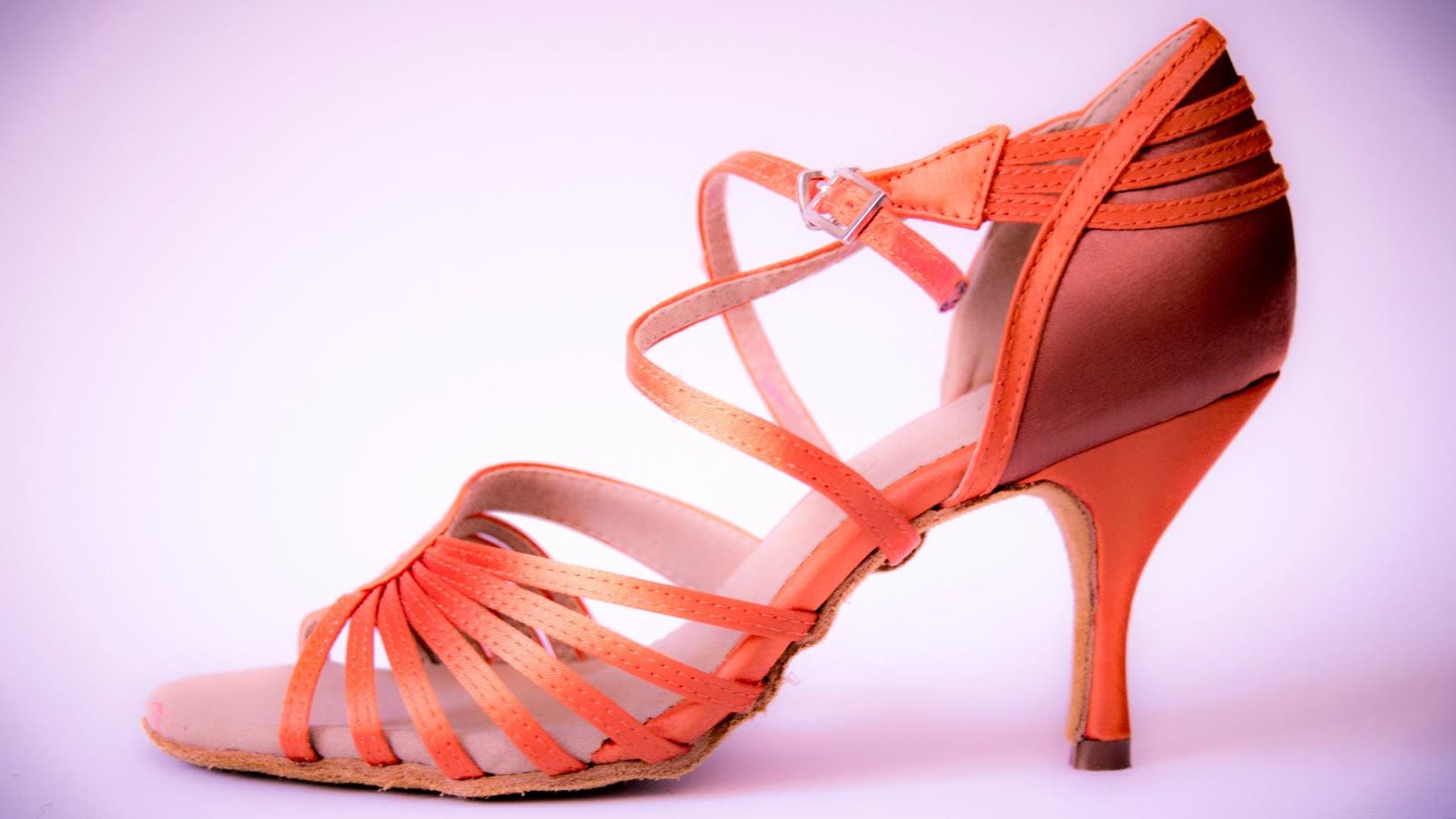
If you take a few classes and decide salsa or bachata is for you — and most people do — investing in proper dance shoes is one of the best decisions you can make. Dedicated Latin dance shoes typically feature suede soles, which provide the perfect balance between slide and grip. They allow effortless turns while still giving you enough traction to push off and change direction quickly.
Women's salsa heels usually come in 2.5-inch to 3.5-inch heel heights with ankle straps for security. Brands like Burju, Ray Rose, Very Fine Dance Shoes, and Werner Kern are popular in the Latin dance community. Expect to spend between 60 and 150 dollars for a quality pair that will last years with proper care.
Men's Latin dance shoes look similar to dress shoes but are lighter, more flexible, and have suede soles. They typically feature a slight heel (about one inch) that shifts your weight forward slightly, making it easier to stay on the balls of your feet — which is where you should be when dancing Latin styles.
Pro tip: do not wear your dance shoes outside. Suede soles pick up dirt and moisture from sidewalks, which ruins their surface. Carry them in a shoe bag and change at the studio. Most experienced dancers have a dedicated pair they only wear on the dance floor.
Clothing for Women: Comfort Meets Movement
The best clothing for a Latin dance class allows full range of motion, breathes well, and makes you feel confident. You are going to be moving your hips, raising your arms, turning, and potentially being dipped or spun, so anything too restrictive or too loose creates problems.
Great options include fitted tops or tank tops paired with leggings, stretchy jeans, or a flowy skirt that hits at or above the knee. Many women prefer skirts or dresses for salsa because the movement of the fabric enhances the visual appeal of the dance and feels incredible when you spin. A-line skirts and circle skirts work beautifully for this.
Avoid long maxi skirts or dresses that can get caught under your feet or your partner's feet. Avoid halter tops with ties that can come undone during turns. Avoid anything too low-cut that requires constant adjustment — you want to focus on the dance, not your wardrobe. Strapless tops are risky because raising your arms (which happens constantly in salsa) can cause them to shift.
For layering, a light cardigan or wrap is useful since studios can feel cool when you arrive and warm once everyone starts moving. You can always remove layers and leave them on the side.
Clothing for Men: Keep It Simple and Clean
Men's dance attire is straightforward. A clean, well-fitted t-shirt, polo shirt, or button-down shirt paired with comfortable pants is all you need. Avoid overly baggy clothing — it looks sloppy on the dance floor and can interfere with your partner's ability to feel your lead through the frame.
Jeans are fine as long as they are not too tight to move in or too stiff to allow hip movement. Chinos, khakis, or lightweight dress pants work well. Athletic wear is acceptable for class, though most men find that dressing slightly nicer than gym clothes helps them feel more in the mood to dance.
One critical point for men: sweat management. Salsa is a cardio workout, and you will be dancing close to partners. Bring a small towel and consider wearing an undershirt to absorb sweat. Antiperspirant is not optional — it is mandatory. Some male dancers keep a spare shirt in their bag for social dances that last multiple hours.
Accessories: What to Wear and What to Leave at Home
Less is more when it comes to accessories on the dance floor. Large rings, bracelets, watches, and dangling necklaces can catch on your partner's clothing, scratch their skin, or get tangled during turns. If you wear a watch, switch it to the other wrist or leave it in your bag.
Earrings should be studs or very small hoops. Long dangling earrings get caught in hair, pulled during turns, and are a genuine safety hazard. Necklaces should be short and secure. Belts with large buckles can dig into your partner during close holds.
For hair, anything that keeps it out of your face and your partner's face works well. Ponytails, buns, and braids are popular among female dancers. If you have long hair and leave it down, be aware that it will whip your partner during fast turns — most experienced dancers eventually opt for an updo.
What to Bring to Class
Beyond your outfit, a few essentials will make your experience significantly better. Bring
a water bottle — you will get thirsty. Bring a small towel, especially if you tend to sweat. Bring breath mints or gum because you will be dancing in close proximity to others, and fresh breath is a courtesy that the entire dance community appreciates.
If you are taking group classes, you do not need to bring a partner. Partners rotate in class, and dancing with different people is actually the fastest way to improve. If you are coming with a partner for a couples date night class, you will still benefit from occasional partner rotations during the learning portion.
Common First-Class Mistakes to Avoid
Do not overdress. This is a dance class, not a gala. You will see people in everything from athleisure to business casual. The important thing is that you can move comfortably and that your shoes allow you to turn.
Do not wear brand new shoes that you have never walked in. Break them in around the house first. Blisters from new shoes can ruin what should be a fun experience.
Do not skip the personal hygiene basics. You are going to be very close to other people. Shower, use deodorant, pop a breath mint, and consider going easy on heavy fragrances — some people are sensitive to strong perfume or cologne in close quarters.
The Bottom Line
Getting dressed for your first Latin dance class should take about five minutes, not five hours of deliberation. Choose smooth-soled shoes, wear comfortable clothes that let you move, minimize accessories, and show up ready to have fun. Nobody at Salsa Dance Napa is judging your outfit — they are too busy having a great time on the dance floor.
Ready to get started? Check out our Salsa Beginners Group Class or our Bachata Beginners Group Class. No experience needed, no partner required, and no dress code — just smooth shoes and a willingness to move. You can also explore our complete beginner's guide to bachata if you are curious about what to expect in class beyond just the wardrobe.
Planning a Napa Valley wedding?
We take a small number of Napa weddings each month, by reservation.
Reserve a Napa Date